As one of the organizers of the Counterpoints Conference: Edward Said's Legacy, I had been looking forward with glee to Derek Gregory's keynote address: War, Culture & Imperialism.
Gregory's presentation at the University of Ottawa yesterday afternoon -- attended by 120 people, standing-room only -- was fantastic. It was a chilling overview of military (im)precision and strategy from a geographical perspective, one that is sorely lacking in social theory more generally.
After patiently laying out the two types of war currently being employed by the U.S. military in Iraq, i.e., precision warfare (smart bombs, remote control drones, etc) and 'armed social work' (winning hearts & minds- re-building schools, etc), Gregory proceeded to debunk the myth of the humanitarian war by demonstrating how 'armed social work' actually solidifies the use of precision warfare.
The irony is that this new military humanism is meant to 'people' previously unpeopled military targets, to render empty spaces into human places. Gregory explains how this allows the attention to turn to the space of the encounter between soldiers and civiliians, for example, soldiers handing out candies to children or blankets to mothers, and facilitates our forgetting that behind this image bombs continue to rain down on people a couple of blocks away.
Of course, there was much more to Gregory's presentation, including a brilliant overview of the new military operations manual and a succinct explanation of the difference between 'our' wars (the West- smart, disembodied) and 'their' wars (the Rest- savage, visceral ). Overall, Gregory was well worth the hype.
Showing posts with label Political Commentary. Show all posts
Showing posts with label Political Commentary. Show all posts
Sunday, November 2, 2008


Saturday, October 25, 2008
On Warm Fall Weather

It has been a lovely fall here in Ottawa. Besides the glorious colours associated with this season -- the reds and oranges have been stunning -- the weather has been warm and above all, bright and sunny. But this isn't a post about the weather. A few of my friends have referred to the weather as a sure sign of "Indian Summer", a term that very commonly refers to warm fall weather in Canada and apparently in the U.S.
There are a few historical reasons generally referenced for this usage, but the most common refers to the perceived deceitfulness of indigenous peoples towards Europeans. In other words, the phrase belongs in the same family of terms such as "Indian giver," which is based on this dubious duplicity. Therefore, in this usage, "Indian summer" would be a "deceitful and treacherous" imitation of summer, which appears to be a return of warmer weather but is really a relatively short-lived "lie" giving way to the "truth" of the usual cold and unpleasant conditions.
My point is not simply to debunk this usage or to list the many ways in which it is terribly inept. Instead, I'm writing this because when I hear people use the term "Indian Summer" I have a sudden jolt of pain run through my body and I thought I'd share why. Can we think of other terms that would suitably replace said term without relying on colonial frameworks? I trust with a little imagination we can...
Saturday, October 18, 2008
Canadian Elections VI
After much discussion with friends, I decided to vote last Tuesday. And I didn't write in a protest vote, but I voted for NDP candidate Paul Dewar, as I had suggested I would in my last two posts (IV & V). Dewar ended up winning in my Ottawa Centre riding, so it became the first time I voted for a winner.
On d-day I just couldn't bring myself to casting a protest vote, or as I had been considering beforehand (I, II & III), not voting at all. There's something about the strength of the call to duty that proved much too compelling, the guilt lay heavy on my shoulders and in the pit of my stomach come election day, and the option of not participating at all was long gone.
My thoughts about the electoral system and the state's role in maintaining inequalities have in no way disappeared. But given my inability to express a clear alternative to voting, or at the very least, a politically consistent version, I decided I'd vote until I could better articulate this position.
I suppose this sets me up with a new research project. A long term project no doubt. This may just lead me to vote some more or maybe not, but either way, the feeling in my stomach when I did vote was unsettled at best.
On d-day I just couldn't bring myself to casting a protest vote, or as I had been considering beforehand (I, II & III), not voting at all. There's something about the strength of the call to duty that proved much too compelling, the guilt lay heavy on my shoulders and in the pit of my stomach come election day, and the option of not participating at all was long gone.
My thoughts about the electoral system and the state's role in maintaining inequalities have in no way disappeared. But given my inability to express a clear alternative to voting, or at the very least, a politically consistent version, I decided I'd vote until I could better articulate this position.
I suppose this sets me up with a new research project. A long term project no doubt. This may just lead me to vote some more or maybe not, but either way, the feeling in my stomach when I did vote was unsettled at best.
Monday, October 13, 2008
Canadian Elections V
Election day is tomorrow and I stepped down from my job as a Deputy Returning Officer (DRO) this past weekend. Luckily Elections Canada has a contingency plan when it comes to people flaking out, so they found a replacement rather quickly.
As I've been explaining in my previous posts (I, II, III, IV), I've been working out my position vis-a-vis voting in the next election. This lengthy deliberation has now brought me back to a familiar place and a newer, protest-based place.
The first place is the one that would see me vote for a social democratic option, probably the winning candidate in my Ottawa Centre riding. While I have done so in the past, some fundamental part of me has been trying to articulate my critique of the Canadian voting system and the Canadian liberal-capitalist state through various means, including by not voting at all or registering a protest vote, which brings me to option two.
This second position sees me voting on election day but registering my protest by writing it out on the back of the official ballot. I have been reflecting on what precisely I would write and after talking with my friend who has seen this year's ballots, I'd say there's ample space to write something in.
However, all of this deliberation and participation in debates and discussions about electoral politics has me thinking about casting my ballot for the NDP candidate. Not so much because I've become totally convinced about the importance or perhaps usefulness of voting, though that is without a doubt a key consideration, but more so because I'm a closet political junkie who keeps track of polls and riding-by-riding analysis and all the other stuff that makes the election a hyper-text. Oh, and the other thing worth mentioning is that a good friend of mine who lives out-of-town but can't vote suggested rather kindly, no guilt intended, that I cast a vote for her. All very reasonable...
So then, I won't officially decide what to do until I walk up the hill to the polls tomorrow afternoon, but I'll make sure to fill you in. And stay tuned for my post-election round-up and commentary. There are few things I enjoy doing more than watching election coverage. Anybody up for watching the U.S. election coverage with me in a few weeks?
As I've been explaining in my previous posts (I, II, III, IV), I've been working out my position vis-a-vis voting in the next election. This lengthy deliberation has now brought me back to a familiar place and a newer, protest-based place.
The first place is the one that would see me vote for a social democratic option, probably the winning candidate in my Ottawa Centre riding. While I have done so in the past, some fundamental part of me has been trying to articulate my critique of the Canadian voting system and the Canadian liberal-capitalist state through various means, including by not voting at all or registering a protest vote, which brings me to option two.
This second position sees me voting on election day but registering my protest by writing it out on the back of the official ballot. I have been reflecting on what precisely I would write and after talking with my friend who has seen this year's ballots, I'd say there's ample space to write something in.
However, all of this deliberation and participation in debates and discussions about electoral politics has me thinking about casting my ballot for the NDP candidate. Not so much because I've become totally convinced about the importance or perhaps usefulness of voting, though that is without a doubt a key consideration, but more so because I'm a closet political junkie who keeps track of polls and riding-by-riding analysis and all the other stuff that makes the election a hyper-text. Oh, and the other thing worth mentioning is that a good friend of mine who lives out-of-town but can't vote suggested rather kindly, no guilt intended, that I cast a vote for her. All very reasonable...
So then, I won't officially decide what to do until I walk up the hill to the polls tomorrow afternoon, but I'll make sure to fill you in. And stay tuned for my post-election round-up and commentary. There are few things I enjoy doing more than watching election coverage. Anybody up for watching the U.S. election coverage with me in a few weeks?
Friday, October 10, 2008
Canadian Elections IV
As I've been outlining in my previous posts (I, II, III), I'm deliberating on whether or not I'll be voting this election. Without totally re-hashing the reasons why I'm even having this debate with myself and others, suffice to say that part of my reasoning has been to enter into discussion about some of the inequities embedded in not only the electoral system (e.g., first-past-the-post, no party that fully represents my views, colonial heritage, etc), but also in Canadian society more generally.
However, as these discussions with my friends have progressed, both in support of and against my loosely-articulated position, I've begun to shift my own opinion. While I'm not entirely surprised, as I mentioned previously I've been here before, I'm leaning towards a new resolution to the problematic.
First, I've decided to step down as Deputy Returning Officer (DRO) in my Ottawa Centre riding. I won't get paid for the three-hour training session I went to, but besides being uncomfortable with upholding some of the regulations (e.g., citizens-only, no face coverings, etc), I'd rather spend 15 hours of my time working on my own work than working for Elections Canada. And, if I give up my spot it'll open a spot for someone else who might need the money more than I do. So, while being a DRO was to be a central plank in my expanded election coverage, I'll be taking it all in from another vantage point.
Second, according to all polls and even progressive voting sites, my riding is a safe NDP riding. MP Paul Dewar is poised to win again. Good for him and the NDP, in fact, I like living in an NDP riding. Knowing this and the way the first-past-the-post system works, my vote will be relatively worthless in terms of electing someone, even though it is kind of fun to vote for a winner for a change.
Because of this, I feel free to play with a couple ideas to operationalize my protest beyond writing about it here and chatting about it with friends. The first idea arrived on my lap via two friends, both of whom record their protest by writing it on the back of the ballot on election day. I'm seriously considering this option, given my general resistance to voting and the fact that the NDP, the only party I'd vote for anyways, will win my riding. Having been trained as a DRO, I know that DRO's must record why a ballot was rejected in the official poll book. So then, this option allows me to participate and protest at the same time.
The next option has come to my attention through facebook. There's a vote-swapping group that allows, say, someone living in Ottawa Centre willing to vote Green swap their vote with someone, say, in Oshawa, where the NDP lost to the Conservatives by 500 votes last time around. So, I vote Green for Jessica in Oshawa and she votes NDP for me there. Pretty straight-forward, though it probably works better when it's a NDP-Liberal swap, since the Greens only have a chance of winning in a handful of ridings in Canada. But there's no way I'm voting Liberal.
The other options are a) not to vote at all and record my protests in the ways I already have been and will continue to in the work I do or b) to vote NDP straight-up. But, as I've been suggesting, at this moment in time right now, I'm leaning towards writing in a protest vote or vote-swapping, primarily because it's innovative and it strikes me as a different kind of protest.
So then, I'll be back soon with more reflections.
However, as these discussions with my friends have progressed, both in support of and against my loosely-articulated position, I've begun to shift my own opinion. While I'm not entirely surprised, as I mentioned previously I've been here before, I'm leaning towards a new resolution to the problematic.
First, I've decided to step down as Deputy Returning Officer (DRO) in my Ottawa Centre riding. I won't get paid for the three-hour training session I went to, but besides being uncomfortable with upholding some of the regulations (e.g., citizens-only, no face coverings, etc), I'd rather spend 15 hours of my time working on my own work than working for Elections Canada. And, if I give up my spot it'll open a spot for someone else who might need the money more than I do. So, while being a DRO was to be a central plank in my expanded election coverage, I'll be taking it all in from another vantage point.
Second, according to all polls and even progressive voting sites, my riding is a safe NDP riding. MP Paul Dewar is poised to win again. Good for him and the NDP, in fact, I like living in an NDP riding. Knowing this and the way the first-past-the-post system works, my vote will be relatively worthless in terms of electing someone, even though it is kind of fun to vote for a winner for a change.
Because of this, I feel free to play with a couple ideas to operationalize my protest beyond writing about it here and chatting about it with friends. The first idea arrived on my lap via two friends, both of whom record their protest by writing it on the back of the ballot on election day. I'm seriously considering this option, given my general resistance to voting and the fact that the NDP, the only party I'd vote for anyways, will win my riding. Having been trained as a DRO, I know that DRO's must record why a ballot was rejected in the official poll book. So then, this option allows me to participate and protest at the same time.
The next option has come to my attention through facebook. There's a vote-swapping group that allows, say, someone living in Ottawa Centre willing to vote Green swap their vote with someone, say, in Oshawa, where the NDP lost to the Conservatives by 500 votes last time around. So, I vote Green for Jessica in Oshawa and she votes NDP for me there. Pretty straight-forward, though it probably works better when it's a NDP-Liberal swap, since the Greens only have a chance of winning in a handful of ridings in Canada. But there's no way I'm voting Liberal.
The other options are a) not to vote at all and record my protests in the ways I already have been and will continue to in the work I do or b) to vote NDP straight-up. But, as I've been suggesting, at this moment in time right now, I'm leaning towards writing in a protest vote or vote-swapping, primarily because it's innovative and it strikes me as a different kind of protest.
So then, I'll be back soon with more reflections.
Wednesday, October 8, 2008
Canadian Elections III
As I outlined in my previous posts on the subject (I & II), I have a new job as a Deputy Returning Officer in my Ottawa Centre riding. I went to the three-hour training session Monday morning, where I found out about the details of my job and even some of the mysterious inner workings of the Canadian electoral system. Spoiled ballots, rejected ballots, scrutineers, poll clerks, screens, deflections, oaths, and the difference between swearing and affirming.
Funny enough, despite my previous lack of enthusiasm for voting, or shall I say, my skepticism in the avowed benevolence of the State system, I'm leaning more towards voting than at any other time during this election cycle, mostly because the guilt of not voting is weighing heavily on me. I think it may have something to do with wanting to counter or respond to the trespasses done in my name. Before I hop onto any voting bandwagon though, there are a few key points sitting rather uncomfortably in the pit of my stomach.
Since my original post, I've had a number of conversations with friends about the importance of voting. A couple dear friends are steadfastly not voting, one choosing to write in her reasons why on the ballot itself, which basically amounts to a non-counted rejected ballot, the other staying at home to protest the state's inaction when it comes to a number of burning social issues, notably the result of War on Terror-like policies and laws on certain racialized groups. However, it seems the majority opinion is that voting for a social democratic party is voting for the betterment of our society, in other words, a more just society. To be clear, I've never doubted that a NDP government would make things better for a larger proportion of the population, economically, socially, etc. In fact, as I stated before, I have voted for the NDP before.
But, if we accept that certain governments will make things better for more people, let's say through universal child care or human rights legislation, how do we explain that for many groups living in Canada very little has changed in the course of the 140 years since Confederation? My question to those who are so keen to vote is how do we account for this discrepancy? Do we not risk participating in a system, one that rewards those who participate as being 'good' and 'ideal' citizens doing their proper duty, that in fact further solidifies inequalities in society?
Where does this idea that the government will do better for those most in need come from? I have received a flurry of emails and group invites urging me to vote, just vote for anybody but the Harper Conservatives. To be honest, I don't really see the difference between the Harper bunch or the Liberals, the only two parties with a chance of forming a government. Remember how the Liberals gutted most of the limited social programs that existed in the early 1990s? Thanks a lot Jean Chrétien, now sometimes nostalgically remembered as a socially-aware, if not casually inept, beacon of reason and fair-play.
The liberal, capitalist nation-state exists and has existed to marginalize, exploit, and manage certain groups of people (indigenous peoples, 'immigrants', people of colour, etc). After all, the Canadian version of the state is premised on the disavowal of indigenous sovereignty. In other words, our so-called freedom is premised on indigenous unfreedom. It is no small wonder that many indigenous nations/peoples refuse to participate in Canadian elections.
It's also no coincidence that such marginalization and exploitation occurs across national boundaries in eerily similar ways. Voting is meant to provide the mass of citizens, however this privileged group of people is selected in a given national community, the opportunity to enact citizenship, however inequitably citizenship is determined.
Besides the clear inequalities manifest in status, region, age, and many other notable social factors in the make-up of the electoral system, all tipped to the dominant race, gender and class hierarchies, election season brings on a number of platitudes about voting as a civic duty. My training session was chalk-full of such liberal doctrine.
What I'd like to suggest is that true change is not going to occur because of the benevolence of the state. This has never happened, the state after all has helped and continues to help constitute inequalities. It does not mitigate against inequalities, this is a central fallacy of liberal political theories. This is why those who vote with the hopes of making things better for a larger group of people will continue to be disappointed. It's a no sum game. Getting more water from your prison guard is something significant and no doubt needed, but it won't get you out of prison.
I think political action needs to continuously occur in relation to the state and its nefarious structures, after all, they continue to exert an extreme amount of pressure on certain groups of people, but I also think it's key to develop ideas and communities that have little to do with the state and its many structures. To articulate a vision of society that radically de-centers the state and builds capacity within various communities in society.
One important question then, becomes whether one can do this while at the same time voting, keeping an eye on the prize, a stateless, radically devolutionary society where groups of people form communities of affinity and organize their politics accordingly. Since I don't see this anywhere on the horizon, voting for a social democratic party like the NDP might just seem reasonable, after all, water when someone needs it is better than no water at all. Reasonable yes, if I can only get around the fact that the Canadian state and what it represents have been the harbinger of terror in the lives of so many people here and abroad. If only I can get around that.
Funny enough, despite my previous lack of enthusiasm for voting, or shall I say, my skepticism in the avowed benevolence of the State system, I'm leaning more towards voting than at any other time during this election cycle, mostly because the guilt of not voting is weighing heavily on me. I think it may have something to do with wanting to counter or respond to the trespasses done in my name. Before I hop onto any voting bandwagon though, there are a few key points sitting rather uncomfortably in the pit of my stomach.
Since my original post, I've had a number of conversations with friends about the importance of voting. A couple dear friends are steadfastly not voting, one choosing to write in her reasons why on the ballot itself, which basically amounts to a non-counted rejected ballot, the other staying at home to protest the state's inaction when it comes to a number of burning social issues, notably the result of War on Terror-like policies and laws on certain racialized groups. However, it seems the majority opinion is that voting for a social democratic party is voting for the betterment of our society, in other words, a more just society. To be clear, I've never doubted that a NDP government would make things better for a larger proportion of the population, economically, socially, etc. In fact, as I stated before, I have voted for the NDP before.
But, if we accept that certain governments will make things better for more people, let's say through universal child care or human rights legislation, how do we explain that for many groups living in Canada very little has changed in the course of the 140 years since Confederation? My question to those who are so keen to vote is how do we account for this discrepancy? Do we not risk participating in a system, one that rewards those who participate as being 'good' and 'ideal' citizens doing their proper duty, that in fact further solidifies inequalities in society?
Where does this idea that the government will do better for those most in need come from? I have received a flurry of emails and group invites urging me to vote, just vote for anybody but the Harper Conservatives. To be honest, I don't really see the difference between the Harper bunch or the Liberals, the only two parties with a chance of forming a government. Remember how the Liberals gutted most of the limited social programs that existed in the early 1990s? Thanks a lot Jean Chrétien, now sometimes nostalgically remembered as a socially-aware, if not casually inept, beacon of reason and fair-play.
The liberal, capitalist nation-state exists and has existed to marginalize, exploit, and manage certain groups of people (indigenous peoples, 'immigrants', people of colour, etc). After all, the Canadian version of the state is premised on the disavowal of indigenous sovereignty. In other words, our so-called freedom is premised on indigenous unfreedom. It is no small wonder that many indigenous nations/peoples refuse to participate in Canadian elections.
It's also no coincidence that such marginalization and exploitation occurs across national boundaries in eerily similar ways. Voting is meant to provide the mass of citizens, however this privileged group of people is selected in a given national community, the opportunity to enact citizenship, however inequitably citizenship is determined.
Besides the clear inequalities manifest in status, region, age, and many other notable social factors in the make-up of the electoral system, all tipped to the dominant race, gender and class hierarchies, election season brings on a number of platitudes about voting as a civic duty. My training session was chalk-full of such liberal doctrine.
What I'd like to suggest is that true change is not going to occur because of the benevolence of the state. This has never happened, the state after all has helped and continues to help constitute inequalities. It does not mitigate against inequalities, this is a central fallacy of liberal political theories. This is why those who vote with the hopes of making things better for a larger group of people will continue to be disappointed. It's a no sum game. Getting more water from your prison guard is something significant and no doubt needed, but it won't get you out of prison.
I think political action needs to continuously occur in relation to the state and its nefarious structures, after all, they continue to exert an extreme amount of pressure on certain groups of people, but I also think it's key to develop ideas and communities that have little to do with the state and its many structures. To articulate a vision of society that radically de-centers the state and builds capacity within various communities in society.
One important question then, becomes whether one can do this while at the same time voting, keeping an eye on the prize, a stateless, radically devolutionary society where groups of people form communities of affinity and organize their politics accordingly. Since I don't see this anywhere on the horizon, voting for a social democratic party like the NDP might just seem reasonable, after all, water when someone needs it is better than no water at all. Reasonable yes, if I can only get around the fact that the Canadian state and what it represents have been the harbinger of terror in the lives of so many people here and abroad. If only I can get around that.
Sunday, October 5, 2008
Canadian Elections II
Some of you may have read my recent post about the upcoming Canadian Elections. At the fear of sounding bloody repetitive, I'll say only that in the post I articulate a very brief and general argument about why I'm thinking of NOT voting in the upcoming elections.
After this post, I went to a lovely dinner at my friend Tracey's place and she urged me to express my opinion, one she clearly didn't share, with the group. This basically led to a fairly heated debate about the importance of voting in a liberal democracy, one I won't get into here.
In any case, a few days after the debate, my friend Lindsey forwarded an Elections Canada online job application to a few of us, urging us to sign up and come see who actually votes on election day. I bit, and next thing you know I'm a Deputy Returning Officer in my Ottawa Centre riding. This basically means that I need to supervise an election site on election day for 14 hours, making sure everything goes smoothly and then overseeing the ballot count at the end of the evening. I have a three hour training session tomorrow morning, and then presumably I get to be an elections manager.
Not bad for someone who might not even vote. But what I will do is write about my training experience and then my experience being a DRO for all of you. Think of me as a correspondent gone to cover the inner-workings and corruptions of the liberal-capitalist elections system in Canada.
Stay tuned!
After this post, I went to a lovely dinner at my friend Tracey's place and she urged me to express my opinion, one she clearly didn't share, with the group. This basically led to a fairly heated debate about the importance of voting in a liberal democracy, one I won't get into here.
In any case, a few days after the debate, my friend Lindsey forwarded an Elections Canada online job application to a few of us, urging us to sign up and come see who actually votes on election day. I bit, and next thing you know I'm a Deputy Returning Officer in my Ottawa Centre riding. This basically means that I need to supervise an election site on election day for 14 hours, making sure everything goes smoothly and then overseeing the ballot count at the end of the evening. I have a three hour training session tomorrow morning, and then presumably I get to be an elections manager.
Not bad for someone who might not even vote. But what I will do is write about my training experience and then my experience being a DRO for all of you. Think of me as a correspondent gone to cover the inner-workings and corruptions of the liberal-capitalist elections system in Canada.
Stay tuned!
Tuesday, September 30, 2008
Some thoughts on the concept of racialization
Last week sometime I was listening to CBC radio, something I have done so many times, it has become pseudo-ritualistic. You know, the voices, the theme music, the topics all blur into one, it's almost soothing. Almost, except I find much of what I hear offensive in some way. I had a friend, who listens to the CEEB religiously, once tell me that the only show she didn't find hurt her regularly in some fundamental way was the weekly gardening show. Somehow they managed to never denigrate indigenous people on this one show, no small feat in a settler country built on such trespasses. And the CEEB, despite its liberal leanings, is there to express such nationalist visions.
There I was, middle of the day listening to the CEEB and the talk turns to the so-called Chinese dairy products scandal. You know, some chemical has been found in dairy products, both wet and dry, and there has been a mass recall in China, one that has affected a few products here in Canada. I'll remind people that this comes on the heels of the listeriosis debacle here in Canada, where none other than Maple Leaf Foods, probably the national meat brand, poisoned hundreds of people with contaminated cold meat cuts, leading to the death of nearly 20 people across the country.
Anyways, here I am listening to this show, and the type of crap people were saying was infuriating. Interviewer: "So, are you going to buy Chinese products?" Respondent(s): "Never, I don't trust Chinese products, I never have, I will not go to Chinatown."
Ok, so yeah, the whole dairy product thing is sketchy. I agree. Luckily I don't eat dairy or meat products, partly because of these types of situations. But the way the respondents were racializing all things Chinese was stunning. It was like they were talking about aliens who eat their kids and love their rodents. God, it made me sick to my stomach.
Never in all of the endless discussions about the listeriosis outbreak did anyone ever invoke the moral or ethical will of the people behind the outbreak. Nor has there been any discussion of their race and/or ethnic make-up, even though many of those responsible for the outbreak have appeared regularly in the media to assuage the public. Can you imagine what would've been said if Maple Leaf Foods was run by any number of hyphenated-Canadians. Instead, I have to listen to some bullshit news report basically tarnishing the 'Chinese' with unsafe food handling practices, lower health standards, questionable moral way-points and worst of all and yet not surprising, an unhealthy disregard for human life, especially children, since many of those affected by the contamination have been children.
And this folks is how racialization works. Sure, we could talk about this in relation to racism, and it surely is an example of how the power of the racial order is upheld, but it also serves as a good example of how the process of racialization works. A whole series of values, beliefs, attitudes, and meanings are clearly being associated here with a group of people, one that is seen as racially outside the white norm. That's how it becomes possible to talk about never going to Chinatown, because the people in question are seen as untrustworthy and dirty. Of course, the meanings associated with being Chinese change and shift, they aren't static, but it is quite amazing how what was being said about the Chinese in Canada on the CEEB last week was so similar to what was being said in the early 20th century, most notably by the White Canada terrorists. Why do racial, and one could add gender and sexuality, codes have such staying power? They clearly get expressed differently, nobody interviewed on the CEEB was walking through Chinatown with a sign demanding the immediate deportation of all Chinese people in Canada and the cessation of all immigration from China, but the ideas about what it means to be Chinese, especially at times of crisis like the SARS outbreak in Toronto in 2003 and this more minor one around dairy products, are there, stubbornly clinging to life.
There was no reason to talk about so-called Chinese values and/or Chinatowns in this newscast. Just like there was no reason to talk about the dozens of grocery store chains that carry contaminated Maple Leaf meat products or who is, in the racial sense, behind that outbreak. But it happened and it happens all the time. That's racialization at work. Some, like the white executives and their representatives, are not racialized, race is not part of the story at Maple Leaf Foods, while others, in this case some apparently shady group of Chinese food producers are very clearly racialized. The dairy product outbreak occurs because of race, strange logic yes, but no coincidence.
There I was, middle of the day listening to the CEEB and the talk turns to the so-called Chinese dairy products scandal. You know, some chemical has been found in dairy products, both wet and dry, and there has been a mass recall in China, one that has affected a few products here in Canada. I'll remind people that this comes on the heels of the listeriosis debacle here in Canada, where none other than Maple Leaf Foods, probably the national meat brand, poisoned hundreds of people with contaminated cold meat cuts, leading to the death of nearly 20 people across the country.
Anyways, here I am listening to this show, and the type of crap people were saying was infuriating. Interviewer: "So, are you going to buy Chinese products?" Respondent(s): "Never, I don't trust Chinese products, I never have, I will not go to Chinatown."
Ok, so yeah, the whole dairy product thing is sketchy. I agree. Luckily I don't eat dairy or meat products, partly because of these types of situations. But the way the respondents were racializing all things Chinese was stunning. It was like they were talking about aliens who eat their kids and love their rodents. God, it made me sick to my stomach.
Never in all of the endless discussions about the listeriosis outbreak did anyone ever invoke the moral or ethical will of the people behind the outbreak. Nor has there been any discussion of their race and/or ethnic make-up, even though many of those responsible for the outbreak have appeared regularly in the media to assuage the public. Can you imagine what would've been said if Maple Leaf Foods was run by any number of hyphenated-Canadians. Instead, I have to listen to some bullshit news report basically tarnishing the 'Chinese' with unsafe food handling practices, lower health standards, questionable moral way-points and worst of all and yet not surprising, an unhealthy disregard for human life, especially children, since many of those affected by the contamination have been children.
And this folks is how racialization works. Sure, we could talk about this in relation to racism, and it surely is an example of how the power of the racial order is upheld, but it also serves as a good example of how the process of racialization works. A whole series of values, beliefs, attitudes, and meanings are clearly being associated here with a group of people, one that is seen as racially outside the white norm. That's how it becomes possible to talk about never going to Chinatown, because the people in question are seen as untrustworthy and dirty. Of course, the meanings associated with being Chinese change and shift, they aren't static, but it is quite amazing how what was being said about the Chinese in Canada on the CEEB last week was so similar to what was being said in the early 20th century, most notably by the White Canada terrorists. Why do racial, and one could add gender and sexuality, codes have such staying power? They clearly get expressed differently, nobody interviewed on the CEEB was walking through Chinatown with a sign demanding the immediate deportation of all Chinese people in Canada and the cessation of all immigration from China, but the ideas about what it means to be Chinese, especially at times of crisis like the SARS outbreak in Toronto in 2003 and this more minor one around dairy products, are there, stubbornly clinging to life.
There was no reason to talk about so-called Chinese values and/or Chinatowns in this newscast. Just like there was no reason to talk about the dozens of grocery store chains that carry contaminated Maple Leaf meat products or who is, in the racial sense, behind that outbreak. But it happened and it happens all the time. That's racialization at work. Some, like the white executives and their representatives, are not racialized, race is not part of the story at Maple Leaf Foods, while others, in this case some apparently shady group of Chinese food producers are very clearly racialized. The dairy product outbreak occurs because of race, strange logic yes, but no coincidence.
Tuesday, September 9, 2008
Canadian Elections
Those who know me could attest to the fact that I don't talk much about electoral politics. I don't see the state-based political system as a central space to engage in struggle over the meaning of living an ethical and just life. In fact, I think the electoral system, with its roots in liberal ideologies, has many built-in inequalities deeply structuring it. Because of this political analysis, one I'm admittedly not developing in this post, I'm a lukewarm voter at best. I've voted NDP a couple of times when I thought they might win, and Green once when my friend was running for them. Whatever the case, I don't believe that any of the parties would change much in society. And this isn't some narcissistic, relativist argument. I just think that anything other than a devolution/revolution, a mixed-bag of socialist and anarchist political theories if you will, can fundamentally change societies in a way I can support wholeheartedly.
As an example of the futility of the current system, I take none other than the current debate about the televised leadership debate. Elizabeth May, the leader of the Green Party, was up in arms yesterday when she found out that the television consortium that decides who gets to sit in on the debates has decided not to include the Greens alongside the usual suspects: Conservatives, Liberals, NDP and Bloc. This decision came after the NDP, Conservatives and Bloc threatened to boycott the debate if the Greens were given a spot on the broadcasts.
Before this sad episode, I was thinking about voting for NDP candidate Paul Dewar, an NDPer who has a real chance of winning in my riding. The same NDP that continuously harkens about bringing in change, about being more equitable, about getting rid of the old parties, can't face up to some healthy challenge from the Greens. Not that the Greens are clean in the entire affair either: they made some deal with the Liberals where their leaders agreed to not run against each other, which apparently led to the Liberals supporting May's appearance in the debates. Whatever. The whole thing is political theatre at its worst. Whenever I follow the news about such items, I feel like I'm in a time machine 2,000 years in the future watching an episode of "The Lost Years: 1700-2100 AD," and it's so funny I want to cry. But then I remind myself that some of the talking heads on the podiums with the beautiful photo-ops in the background not only really believe they might be able to change certain things for those most in need, but many of them will actually have the ability to make decisions that affect the lives of millions of people, often, as is the case with liberal, capitalist societies, to the detriment of the majority of folks out there.
So I'll keep following the stories about how Stephen Harper is more masculine than Stéphane Dion, and how Jack Layton would make a better Prime Minister than Elizabeth May, but not without wondering who the fuck cares? What about the fact that we live in a society where the huge majority of people have accepted that a grossly disproportionate amount of indigenous people live in dire poverty? I could list off any number of issues that will not be discussed in any real, sustained manner during these elections, but I won't bother right now. Instead, I'll suggest that those who care about the issues that aren't going to be discussed address these issues in their own ways, amongst their own communities, and let those around them know that they are doing so. And if you want, tell them that you're disengaging from the elections, not because you don't believe in freedom or justice or the fuzzy principles of democracy, tell them it's precisely because you do care. About people, animals, birds, fish, trees, water, and all those other beings and things that animate our world.
No leaders' debates. No political attack ads. No commercials selling you a constructed image. No polite, parliamentary debate about what the definition of torture is. Or whether there are too many immigrants. Or welfare Moms. Or criminals in communities of colour. There are too many inequalities that go unmentioned every day. Because of this, I'm not voting, and this time I'm telling people why.
As an example of the futility of the current system, I take none other than the current debate about the televised leadership debate. Elizabeth May, the leader of the Green Party, was up in arms yesterday when she found out that the television consortium that decides who gets to sit in on the debates has decided not to include the Greens alongside the usual suspects: Conservatives, Liberals, NDP and Bloc. This decision came after the NDP, Conservatives and Bloc threatened to boycott the debate if the Greens were given a spot on the broadcasts.
Before this sad episode, I was thinking about voting for NDP candidate Paul Dewar, an NDPer who has a real chance of winning in my riding. The same NDP that continuously harkens about bringing in change, about being more equitable, about getting rid of the old parties, can't face up to some healthy challenge from the Greens. Not that the Greens are clean in the entire affair either: they made some deal with the Liberals where their leaders agreed to not run against each other, which apparently led to the Liberals supporting May's appearance in the debates. Whatever. The whole thing is political theatre at its worst. Whenever I follow the news about such items, I feel like I'm in a time machine 2,000 years in the future watching an episode of "The Lost Years: 1700-2100 AD," and it's so funny I want to cry. But then I remind myself that some of the talking heads on the podiums with the beautiful photo-ops in the background not only really believe they might be able to change certain things for those most in need, but many of them will actually have the ability to make decisions that affect the lives of millions of people, often, as is the case with liberal, capitalist societies, to the detriment of the majority of folks out there.
So I'll keep following the stories about how Stephen Harper is more masculine than Stéphane Dion, and how Jack Layton would make a better Prime Minister than Elizabeth May, but not without wondering who the fuck cares? What about the fact that we live in a society where the huge majority of people have accepted that a grossly disproportionate amount of indigenous people live in dire poverty? I could list off any number of issues that will not be discussed in any real, sustained manner during these elections, but I won't bother right now. Instead, I'll suggest that those who care about the issues that aren't going to be discussed address these issues in their own ways, amongst their own communities, and let those around them know that they are doing so. And if you want, tell them that you're disengaging from the elections, not because you don't believe in freedom or justice or the fuzzy principles of democracy, tell them it's precisely because you do care. About people, animals, birds, fish, trees, water, and all those other beings and things that animate our world.
No leaders' debates. No political attack ads. No commercials selling you a constructed image. No polite, parliamentary debate about what the definition of torture is. Or whether there are too many immigrants. Or welfare Moms. Or criminals in communities of colour. There are too many inequalities that go unmentioned every day. Because of this, I'm not voting, and this time I'm telling people why.
Thursday, September 13, 2007
Colonialism Revisited
Making dinner tonight, I was listening to the radio, hoping to get caught up on some local, national and international happenings. Little did I know that I'd be given a stark lesson in contemporary colonial politics.
Not surprisingly, earlier today Canada, along with Australia, New Zealand and the United States voted against the UN Declaration on the Rights of Indigenous Peoples, which has been in the works for nearly 30 years. Not only am I utterly embarrassed, but I'm nearly at a loss for words. Nearly.
Another segment that followed only a few short minutes later discussed the story of the Keewatin-Patricia District School Board (KPDSB) in northern Ontario, based in Ignace to be exact. The board has refused to accept any Aboriginal students from the Obashkaandagaang First Nation (OFN) because their government is apparently $1 million in arrears in their debt to the KPDSB. Forget the fact that the debt is perhaps decades old, or that the OFN has actually paid tuition for its students for the past 8 years. Let's also forget about the fact that the money for Aboriginal education is a federal jurisdiction and that school boards in Ontario normally see any status First Nation student as a source of extra, federal funding for their operations. Let's forget about all of that.
Let's just think about the fact that the local school board and all of its affiliated schools are barring local students from attending these schools. In reality, regardless of their avowed intentions, what they are doing by taking away these children's rights to an education, is violating one of child's primary rights. Luckily, we signed the UN Declaration of the Rights of the Child in 1959, not joining the United States and Somalia (which had no functioning government at the time) as the only hold-outs. Here is an excerpt of Principle 7 of the Declaration, one I argue the KPDSB is in direct contravention-
"The child is entitled to receive education, which shall be free and compulsory, at least in the elementary stages. He shall be given an education which will promote his general culture and enable him, on a basis of equal opportunity, to develop his abilities, his individual judgement, and his sense of moral and social responsibility, and to become a useful member of society.
But if we all properly considered what was owed in a much different moral universe, a mere $1 million would seem a drop in a bucket of colonial misdeeds. I won't bother to list these indiscretions off here, but the position Canada took today is a very accurate reflection of the status of indigenous peoples in this country. Let's not fool ourselves into thinking otherwise.
Our story as Canadians is premised in the first order on violence against indigenous peoples, and sometimes it seems we are unable to see ourselves any other way. I'm only glad that the children from the OFN were able to secure spots in the local First Nation education authority for this year, just in time for October. What a sorry state.
Not surprisingly, earlier today Canada, along with Australia, New Zealand and the United States voted against the UN Declaration on the Rights of Indigenous Peoples, which has been in the works for nearly 30 years. Not only am I utterly embarrassed, but I'm nearly at a loss for words. Nearly.
Another segment that followed only a few short minutes later discussed the story of the Keewatin-Patricia District School Board (KPDSB) in northern Ontario, based in Ignace to be exact. The board has refused to accept any Aboriginal students from the Obashkaandagaang First Nation (OFN) because their government is apparently $1 million in arrears in their debt to the KPDSB. Forget the fact that the debt is perhaps decades old, or that the OFN has actually paid tuition for its students for the past 8 years. Let's also forget about the fact that the money for Aboriginal education is a federal jurisdiction and that school boards in Ontario normally see any status First Nation student as a source of extra, federal funding for their operations. Let's forget about all of that.
Let's just think about the fact that the local school board and all of its affiliated schools are barring local students from attending these schools. In reality, regardless of their avowed intentions, what they are doing by taking away these children's rights to an education, is violating one of child's primary rights. Luckily, we signed the UN Declaration of the Rights of the Child in 1959, not joining the United States and Somalia (which had no functioning government at the time) as the only hold-outs. Here is an excerpt of Principle 7 of the Declaration, one I argue the KPDSB is in direct contravention-
"The child is entitled to receive education, which shall be free and compulsory, at least in the elementary stages. He shall be given an education which will promote his general culture and enable him, on a basis of equal opportunity, to develop his abilities, his individual judgement, and his sense of moral and social responsibility, and to become a useful member of society.
The best interests of the child shall be the guiding principle of those responsible for his education and guidance[...]"
Thus, it is into this context of national and international disregard for the rights of indigenous peoples that I see these two events as intimately connected. How can I not? The school board trustees in northern Ontario see the rights of indigenous peoples in a much different light than they see their own, and those of their own children, otherwise, how could they not take a different bargaining tract? Their budget does not face a shortfall, they are not on the verge of insolvency, they are simply harking to get back what is apparently owed, using Aboriginal students as leverage.But if we all properly considered what was owed in a much different moral universe, a mere $1 million would seem a drop in a bucket of colonial misdeeds. I won't bother to list these indiscretions off here, but the position Canada took today is a very accurate reflection of the status of indigenous peoples in this country. Let's not fool ourselves into thinking otherwise.
Our story as Canadians is premised in the first order on violence against indigenous peoples, and sometimes it seems we are unable to see ourselves any other way. I'm only glad that the children from the OFN were able to secure spots in the local First Nation education authority for this year, just in time for October. What a sorry state.
Wednesday, August 22, 2007
The Phantom Strike
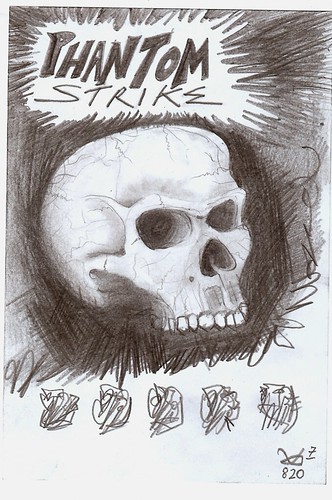
Summer thundershowers feel like a loving embrace. Comforting. A phantom strike in the night, when darkness unveils the stars and the sky lights up with moonlight. The smell of the rain, its dampness, reminds me of days long past, when thunder made me cower into a corner, waiting...
inspiration
inspiration
Tuesday, June 5, 2007
Hockey Passion is Offside

Let me be clear: I’m a hockey fan. I grew up watching French broadcasts of Le Tricolore on TVA and TQS. I’d sit there wrapped up in a warm blanket watching the action with my Dad, brother and sometimes my Mom. Since those early days cheering on the Habs, my allegiances have shifted to the Sens. I remember watching a game in their first season at the Civic Centre, they played the Minnesota North Stars and won. The feeling of excitement in Ottawa during that first season could be felt everywhere. We had finally made it big. As I’ve grown a bit older, my enthusiasm for the game has waxed and waned, but my love for the Sens has stayed more or less consistent. Thus, it’s with wide open arms that I’ve welcomed the Sens’ recent run to the Stanley Cup finals.
However, this interest has been put to the test recently by the expressions of militarism and nationalism that keep cropping up in my hockey-loving neighbourhood. First, it’s the CBC sending the Stanley Cup to Afghanistan for photo and video opps. with Canadian troops. In addition to this absurd exercise, the CBC, in its infinite wisdom, decides that we need to hear Gen. Hillier’s comments on the synergy between hockey, the nation and the military. It’s bad enough that Don Cherry does this every game, his raw-raw-raw for the Canadian military has never sat well with me, but c’mon, the military’s PR man discussing Canada’s role in Afghanistan as linked to our hockey heritage. Talk about propaganda. Are the military and CBC brass that desperate? I’ll take Ron without Don any day, thank you very much.
Aside from the CBC’s overtly propagandistic editorial coverage, what has happened to my beloved Sens’ fans here in the city? I left the city for Games 1 & 2, only to return to a militarized zone. Don’t get me wrong, I think Sens fans disguised as duck hunters in full camouflage brandishing plastic guns are clever, but really, do we need to express our support in such symbolically violent ways? But worst of all are the flags, banners and outfits proclaiming loudly that so-and-so is a member of the ‘Sens Army’. I’ve always understood that hockey, with its jock culture, thrives on displays of masculine power, but I can’t help but be sadly disappointed when inherently violent institutions, like the military and even the nation, are called forth to express ones support for anything, let alone a bunch of boys playing a game.
Apparently many of us adults think it’s ok to brandish about pretend guns, support real guns shooting and torturing people overseas, and unquestioningly lend credence to the conservative forces currently ruling our land, all in the name of hockey.
A few days ago, I decided it was best to be ambivalent about my support for the Sens, and that, in fact, my overall support for hockey had diminished considerably given the celebrations of violence I have been witnessing. Too bad, I hear it’s a good time to be a hockey fan in Ottawa. I’ll sit this one out though.
Subscribe to:
Posts (Atom)